AI News
DexForce trains humanoid robots in simulation instead of the real world
Chinese startup DexForce says it trains robots in virtual copies of workplaces before moving them onto real machines, and that this is faster and cheaper. The Reuters report gave no cost figures, so that part is a claim.
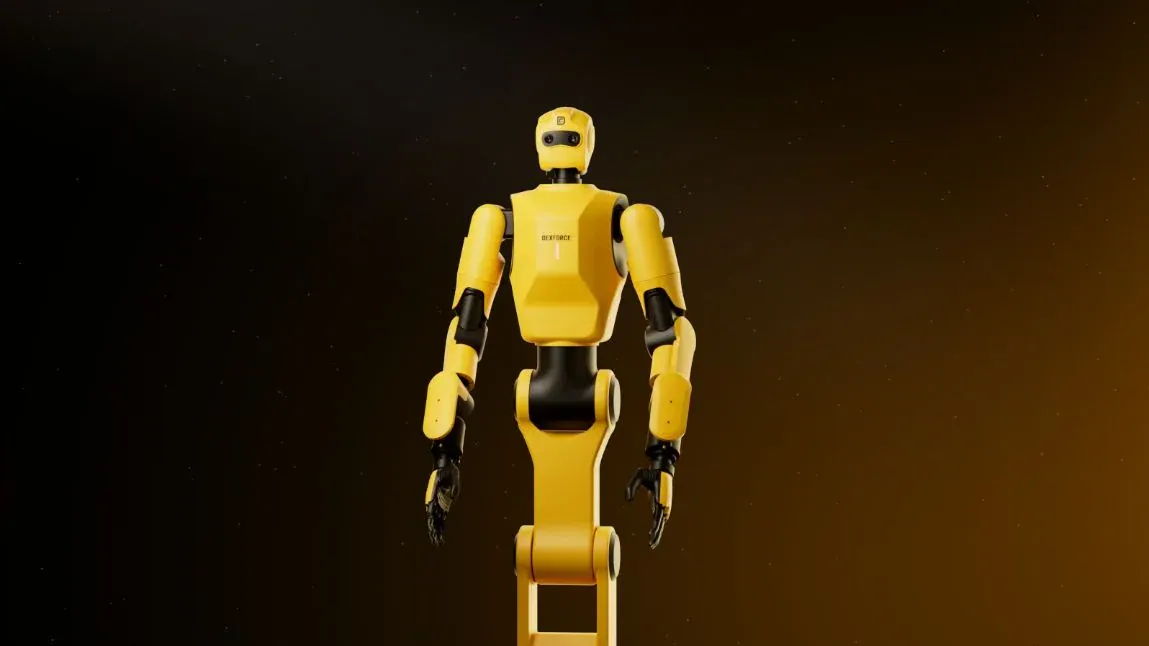
Chinese startup DexForce says it trains humanoid robots mostly in simulation, not by having people repeat tasks in the real world. Reuters reported on 15 October 2026 that the Shenzhen company builds virtual copies of workplaces, trains robots there, then moves what they learn onto physical machines.
How it works
DexForce, founded in 2021 by machine-learning professor Jia Kui, makes software that simulates physical environments and models how objects move and interact. It also makes humanoid robots. The process has three steps:
- Build a digital version of a workplace or task.
- Train the robot in that simulation.
- Transfer what it learned to a physical robot.
The company relies mainly on synthetic (computer-generated) data. It says this is faster and cheaper than collecting data from human trainers, who may need to repeat a movement more than 100 times.
What DexForce says
- Customers: its software is reportedly used by Toyota, Samsung, Panasonic, Foxconn, Haier and Hisense, and its humanoids reportedly make coffee and serve customers at malls and tourist sites in more than 15 cities. These details come from the company. Reuters did not independently verify them.
- The data problem: Jia argues that collecting real-world data alone would need about 10 trillion samples to reach general-purpose physical AI. That is her opinion, not a finding.
- Funding: about 1 billion yuan (roughly $147 million) in a recent funding round, at a valuation above 10 billion yuan. Bloomberg reported that DexForce is considering a Hong Kong listing. The company declined to comment.
What is not shown
The report gives no cost figures, so "cheaper" is a claim without numbers. It also notes that most Chinese robot makers use a mix of simulated and real-world data, and that many say good training data is their main bottleneck.
Questions to ask if a vendor pitches you a robot
This is our suggestion, not part of the report.
- How much of the training was simulated, and how much was done on real machines?
- Where has it been tested, and who checked the results?
- What does it cost to do one task, in figures rather than percentages?